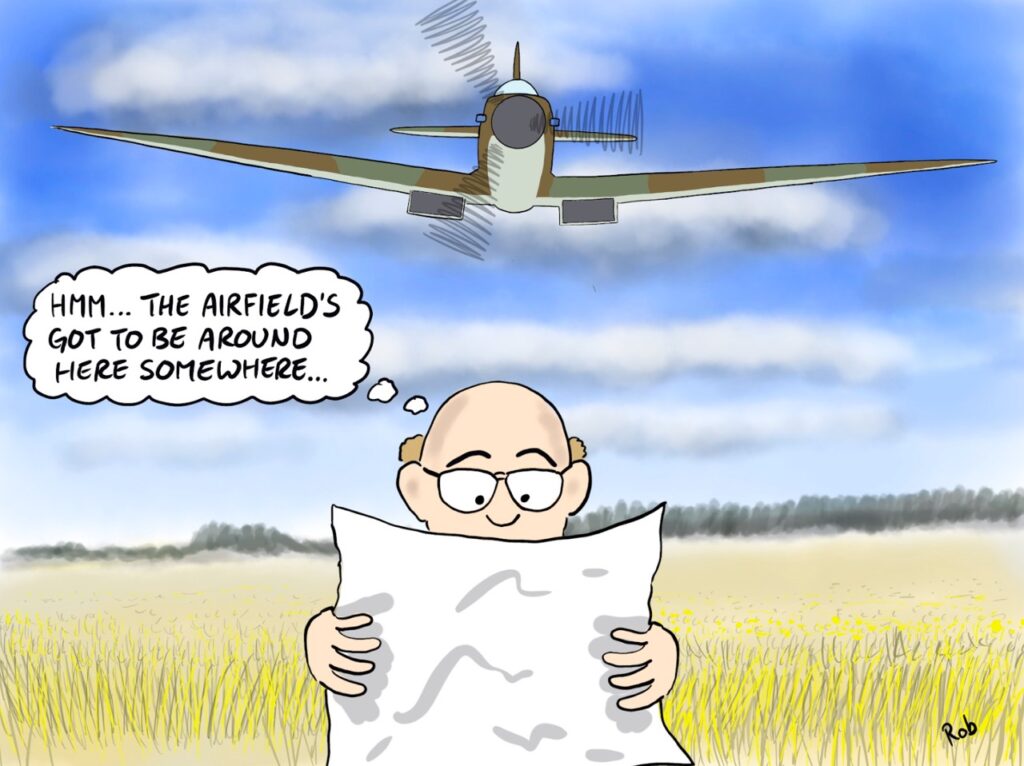
Battle of Britain
The Spitfire became synonymous with the Battle of Britain, though Hurricanes actually shot down more German aircraft. Didn’t matter – the Spitfire captured public imagination.
That elliptical wing shape, those graceful lines, the Merlin engine sound – everything about it seemed right. Looked fast standing still.
Pilots loved them. Good handling, responsive, fast. Confidence in your aircraft matters enormously in combat. Spitfire pilots had that confidence.
Development Through the War
Each mark brought improvements. Heavier armament, more power, better performance at altitude, different roles. Photo reconnaissance Spitfires flew unarmed at extreme altitude. Fighter-bomber versions carried bombs and rockets. Naval Seafires operated from carriers.
That versatility kept the design relevant. A good basic airframe can be developed extensively. The Spitfire proved that.
After the War
Some air forces flew Spitfires into the 1950s. The last combat sortie was 1954. Not bad for a design from the 1930s.
Racing Spitfires competed in air races. Some still do. Modified for pure speed, they’re spectacular.
Surviving Spitfires
About 70 airworthy Spitfires exist today. More than any other World War II fighter type. They fly at airshows worldwide. That Merlin sound is unforgettable.
Seeing one fly makes everything real. Not just history in books – actual aircraft that fought, that mattered, still doing what they were built for.
The Battle of Britain Memorial Flight operates several. Watching them form up with a Lancaster and Hurricane is moving. That’s history alive.
Your Spitfire Connection
Maybe family flew or maintained them. Perhaps you’re an aviation historian who appreciates the design. Could be you’ve seen them at shows and been moved by that sight and sound.
Or you just understand what the Spitfire represented – British engineering at its best when it mattered most.
I’ll draw your Spitfire story. Specific marks, particular squadrons, famous pilots, whatever it means to you.
What I Can Do
Know what you want? Tell me. Working it out? That’s fine. Specific squadron markings, particular aircraft codes, combat scenes, formation flying, whatever tells your story.
That elliptical wing’s instantly recognizable. Early marks with the smaller rudder, later marks with the bigger one, Griffon-powered versions with the five-blade prop – each distinctive.
Why the Spitfire Matters
It represented hope when things looked bad. During the Battle of Britain, Spitfires overhead meant protection. That symbolism became permanent.
R.J. Mitchell died before the war started. Never saw his design prove itself in combat. But what he created influenced aircraft design for decades.
The Design
Mitchell prioritized performance and handling. The elliptical wing wasn’t chosen for looks – it gave the best lift distribution. Everything about the design served function.
The result happened to be beautiful. Good engineering often is. Form following function creates elegance.
Pilot Accounts
Read what pilots said about flying Spitfires. The handling, the response, the feeling it would do exactly what you asked. That connection between pilot and aircraft mattered.
Many pilots survived because they flew Spitfires. The aircraft’s capabilities gave them fighting chances.
Let’s Draw Your Spitfire
Whether you’re an aviation enthusiast, history buff, have family connections, or you’re just moved by what the Spitfire achieved – let’s create something that celebrates it.
Been doing this long enough to know what makes the Spitfire special. The graceful lines, the Merlin sound, the aircraft that mattered when it mattered most – worth preserving.
Get in touch. Let’s sort out your Spitfire cartoon.